Two Blocks on the West Side

Last week, I went to a chaplain graduation with one of my parishioners (congrats, Cindy!). The program was at Bishop Anderson House, in the Illinois Medical District, so the ceremony was nearby at one of our West Side Episcopal churches, St. Andrew’s, a historically Black church.

St Andrews Threshold

For some, it’s downtown Chicago that fills them with pride and love for the city. For me, it’s little corners of old neighborhoods. I wish I’d taken more pictures of the old rowhouses we saw around St. Andrew’s, near Hoyne and Washington, probably dating back to the late 19th century. The neighborhood is a mixed one – some gentrification, but still a lot of poverty. Still, there are some striking places. One rowhouse, well-kept:

IMG_1666

It’s part of the campus of St. Leonard’s House, a program for adults coming out of the prison system.

Turning around, we saw acres of empty parking lot flanking the immense stadium where the Chicago Blackhawks and Bulls play. It looked like a mountain rising above empty plains, far in the distance. There’s a general feeling of emptiness in the neighborhood, although I bet it’s not like that on game days.

Not sure this quite captures the vast emptiness feeling… but thanks, Google Maps!

Screen Shot 2013-05-09 at 8.04.27 PM

A lot more rowhouses used to be here, before getting razed in the name of Chicago sports – first the Chicago Stadium (1929-1994), then United Center (1992).

A half block to the left of this photo, St. Andrew’s was built in 1949. It’s brick with clear glass windows, built primarily by Black Americans who’d come to the West Side of Chicago during the Great Migration. I didn’t get an outside photo, but here’s one from their Facebook page:

St Andrews Doorstep

Inside, it’s a narrow, cozy space — with wood rafters that I wish I’d thought to include in the picture. All the windows were open to let in the May breeze.

IMG_1657Neat fish on the baptismal font, huh?

But it looks kind of crowded so I’m not sure you can really feel the space. So here’s another shot, also from their Facebook page (as was the first photo in this post), of the nave from the other direction, empty:

St Andrews Nave

Simple, cozy, full of light.

They have some beautiful art. Like this Black Madonna, with handmade memorial plaque:

IMG_1659

And a child Jesus, haloed inside an African shield, I think (with Episcopal flag).

IMG_1661

I saw a lonely Roman numeral painted on the wall: a station of the cross (couldn’t find others around the space, but maybe I wasn’t looking right).

IMG_1662

This church and its landscape makes me miss living in the city.

One of the chaplain graduates made fun of me as I took this last photo — “Didn’t you say you grew up in the city?” she yelled across the parking lot, suggesting that I shouldn’t find all this urbanity so novel.

But I saw a story. And I love when houses or landscapes tell stories.

IMG_1668

Sad, broken windows, topped with triangular cornices that long ago someone spent time and money on to etch with flowery designs. A transom window over the boarded-up door, intact. The front steps torn out and rebuilt a while back. There’s a black cat hunting on those steps. And what does that great big red X mean?

The cornices and windows on the house next door are gorgeous and in great condition.

One house is empty. One house is nicely kept. And they’re stuck together, next to a big empty lot.

OK, so it would be tough to live here and I realize I may be terribly patronizing and silly to suggest that these two blocks on the West Side are beautiful, but I just had to tell you about them.

IMG_1663

Me and Cindy after the graduation, before dinner, served to us by some residents of St. Leonard’s and delicious on that mild spring night.

My Conversation with “Jacob”

pews

Why Congregations Shouldn’t Work So Hard to Keep Their Young People

This is an article I wrote for the Collegeville Institute about “Jacob,” a Jewish kid who composes music on an old Game Boy and plans to stop being “religious” when he goes to college, and impressed me in a conversation we had last week. Maybe he’ll never come back to synagogue as an adult, but he’s a great human being and his congregation hasn’t failed him. I hope the same for the kids in my own church.

On “Ashes to Go”


Ashes to Go

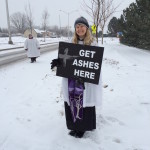
Starting early on Ash Wednesday morning, while it was still dark, two church members and I stood in our church driveway and parking lot, wearing white robes and offering ashes to the people driving by. We’re on a relatively busy street, but it was freezing cold and dark and I’m not sure that, before the sun rose, many folks could even see us or what we were doing. But our first pilgrim drove up at 6:10 a.m. She and I read this prayer together, combined from two of the prayers said in the Episcopal Ash Wednesday service:

Almighty and merciful God, you hate nothing you have made, and forgive all who are penitent; create in us new and contrite hearts, so that when we turn to you and confess our sins and acknowledge our need, we may receive your full and perfect forgiveness, through Jesus our Redeemer. Amen.
 

I marked her forehead with ashes saying, “My sister, remember you are dust, and to dust you will return.” I handed her a flyer with the prayers and an explanation about Lent and said, “Go in peace.” Then she drove away.

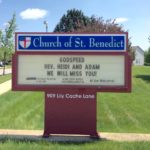
She was driving to her shift at a local big box store – I know because it turns out one of my parishioners is her coworker. This woman had the first smudged forehead they’d seen that morning and she told Cindy, “I got my ashes from a church on Lily Cache – they were out in the parking lot!”

Cindy said: “Wait, I think that’s MY church!”

Her coworker said, “Please tell them thank you. I can’t go to Mass today but I’m Catholic and I like to get ashes on Ash Wednesday.”

It sounds shallow, I realize, to invite people to “drive thru” and get ashes. Another way church is going retail. Another way church is becoming consumer and convenience driven. Jesus died on the cross and people just lower their window to remember their mortality? Then drive away? Believe me, it took me a few years to get on board here.

I hesitated because I wanted to get my theology straight on this. But it was also because offering “Ashes to Go” meant meeting lots and lots of strangers and offering them something that’s quite intimate and powerful. It was a little scary to think about!

What changed my mind? First, one of my more conservative church members told me she thought we should do it… and she wanted to help make it happen. Her witness pushed me forward.

Second: Jesus’ example. Jesus didn’t sit in synagogues or at home, expectantly waiting for people to come visit him – he was on the road, in the marketplace, out on hills, meeting people out in their lives and places. Are we being faithful Christians, taking His love to those who need it most, by sitting in our churches and waiting for people to join us? Especially when so many people have been burned by their churches; coming back inside could require some emotional bravery, facing down bad memories, and taking the risk of getting hurt again. Many people haven’t grown up in a church at all and might not imagine there’s anything inside for them, or worse, that established Christians wouldn’t welcome them there.

But Jesus called us to be evangelists, to go out into the world, in twos and threes, to minister to the people we meet. Ashes to Go is a form of evangelism that is both socially and theologically appropriate to offer to people out in parking lots and train platforms, sharing God’s love, a call to repentance, and some Christian teaching with “the crowds,” just as Jesus and John the Baptist did. (Admittedly, we left “You brood of vipers” off our prayer card this year.)

Third, getting smudged with ashes isn’t a sacrament. It’s a sign of repentance, it’s an ancient ritual for starting the season of Lent, but it’s not like Baptism or Eucharist. A shared worship that includes ashes is wonderful and powerful, but it’s not essentially tied to the rite.

Baptism, on the other hand, is a lifelong commitment and requires deliberation and preparation. In the Episcopal Church, baptism is always done on a Sunday morning in the midst of a worshipping community. It’s a community event. The Eucharist is also community act, shared between priest and congregation, witnessing to the Body of Christ on the altar and in our midst. I’m sure someone out there has tried it, but offering “drive thru” Communion or Baptism is theologically unthinkable.

However, there are no prerequisites for receiving ashes on Ash Wednesday. You don’t need any classes or meeting with a priest to get ready for it. It’s a form of witness, not a sacrament. It’s a mark of mortality, not of doctrine. It’s a sign of intention to begin a season of prayer and fasting and to choose to draw closer to God, but not necessarily one that requires . And everyone who drove through our parking that morning seemed to know this – and every time we prayed together and marked people with ashes, there was a sense of great reverence. Sometimes tears.

(Then there was the man who stopped to ask what we were doing and when I explained, he pulled away as he said, “I’m sorry, I just don’t have time!”)

Fourth, and finally, Ash Wednesday is a weekday. These days, people work multiple jobs, have kids with multiple schedules, work and go to school simultaneously, and generally are subject to institutions that don’t have much regard for religious observance or people’s family lives. Someone said on my Facebook page, “He gives us SO much, make the time to properly say thank you… People find 60 minutes to catch up on TV.” This is true. Jesus give us so much. But I honestly believe the people who drove through our parking lot that day weren’t trying to cheat him of his due, but were unbelievably grateful to catch a glimpse of him in the midst of all the day was demanding of them. Now, I’m sure there are people who would trade an hour of church for two minutes of drive thru ashes – but are they the ones who are also going to take time to stop and ask strangers to put ashes on their heads? I have a feeling those weren’t the ones who let Stephen, Sheeba, and me pray with them and smudge their faces.

A woman drove up with her teenage daughter in the passenger seat, and said to me in her flat, Chicago accent, “She needs ashes because she can’t go to Mass tonight.” The mom did not receive ashes, because she would get them at church later.

A man on a bike stopped for ashes. A woman and her son stopped and told me they were Baptist, but could they have ashes? A teenage kid walked by on his way to school and asked what the ashes were for. Oh yes, he’s heard about this at his church. He took one of our prayer cards and said would think about it.

One of our own members drove through with her two young sons in the backseat. She has tinted windows, so I didn’t see them when I said the prayer with her and gave her ashes. Five minutes later she was back and told me, “Well, I didn’t realize the boys wanted ashes, but they made me come back!”

Others said to us, “This is so wonderful – thank you so much.” Or “I’m so glad I found you here!” And others said, “What is this? Tell me about the ashes.” A few said, “I really need prayer today.” Some were Roman Catholic, some were not familiar with Lent or Ash Wednesday, and some were our own church members. They were old and young, shabby and well-dressed, White, Latino, and Black.

Sheeba, Stephen, and I also spent a lot of time on the sidewalk, waving at people driving by. Our signage wasn’t great, so I’m sure many folks thought, “Who are those crazy people waving at me?” But many of them waved back. Including lots of school bus drivers and one garbage truck driver who seemed to be thinking very seriously about stopping before he drove on by. Offering ashes was powerful but it was also wonderful to have a reason to wave at people driving to work or school that winter morning – maybe cranky, rushing, or dreading the day ahead. I’m sure they couldn’t hear me alternating between greetings of “Repent! Repent” and “God loves you!” but an astonishing number waved back at us. There’s so little kindness in the world it seems, I was glad we could offer some, even if most people didn’t stop for ashes or prayers.

Most of the people who drove by that morning kept on driving. But about 50 cars stopped, and 74 people received ashes from us that morning. 15 were church members. Many were parents of kids who attend the middle school next door. Most were strangers. None of them have turned up at church since, but that wasn’t the point. The point was to come outside our church walls and witness to Jesus Christ, to admit our sin and mortality, and to proclaim his great love and grace for us and for all. Surely, this is our greatest call as Christian people.

Can Pastors Be Honest? (article link)

The Young Women’s Clergy Project published a piece of mine today at their blog, Fidelia’s Sisters. It’s just as relevant for non-clergy types:

Telling the Truth

“Wait, you mean you still haven’t fired him yet?” I burst out at my colleague. She was having a meeting with her music director. The same music director. The same director, who, over a year before, she’d told me was impossible to work with and so she was forming a plan to ask him to resign. I assumed he was long gone but a year later, here she was: as angry with him as she ever was and still squirming over how she could find the nerve to let him go. …

What a Pastor Does

“So, what exactly do you do as a pastor? Do you do a lot of counseling?” Adam and I were on vacation the week after Christmas and the man who ran the B&B where we stayed asked me this.

It’s hard to explain. At least this guy didn’t ask if I only work on Sundays.

I wrote this list for my church board last year, trying to capture as much of what I do as possible. It ended up very nuts and bolts — much more administrative-sounding than it really is. A lot of what I do is more emotional work: inspiring people, comforting them, setting boundaries, keeping order. It’s sort of a combination between running a small business, being a family matriarch, being a life coach, running a family camp, and running a theater with a single weekly production every Sunday morning, year in and year out. Sometimes I also feel a bit like a museum curator, in charge of a historical tradition that people want to connect with as a way of connecting with the past, or family traditions. I also hope I’m working as  a subversive revolutionary, speaking up for love, mercy, transformation, and the Big Presence of Love I call “God” and feel so potently in the world around me.

Or at least, that’s how I see it today. It’s sort of a constantly changing algorithm of variables. Sometimes I want to snort when we call it “organized” religion, because, at least in my world, it’s kind of a mess. And that’s ok.

Does she just blow bubbles all day?

Does she just blow bubbles all day?

Anyway, here’s the list. (I did some translating, but some things may still be in “church language” – apologies in advance!)

Worship Leadership

clergy sermon group, weekly
plan Sunday service
plan and proof bulletins
plan seasonal liturgies (Lent, Pentecost, Advent, etc.)
study for and write sermons
preach sermons
lead Sunday service
collaborate on music w/ music director
collaborate with the altar guild
coordinate seasonal liturgies (Christmas, Holy Week, Rogation)
oversee ministry leadership (lectors, ushers, chalice bearers, acolytes)
weddings: meetings, plan, sermon prep, lead
funerals: meetings, plan, sermon prep, lead


Teaching

Sunday Seminars for adults
-        get suggestions for and plan topics
-        invite speakers
-        prepare and lead some sessions myself
school-age classes
-        recruit and coordinate teachers
-        lead classes
-        communicate with parents
-        plan other activities
younger kids class – oversee teachers, curriculum, and program
plan and teach Inquirers’ Class in Lent (7 classes, meets weekly)
Lent, Advent, and other weeknight offerings
research, order and distribute Lent and Advent special devotion materials
Baptismal preparation with parents or adult candidates
Confirmation preparation with teenagers
Ordination process: teach, guide, and prepare those who feel called to be deacons or priests to enter the process at the local and diocesan level


Ministry Programs

encourage leaders to imagine and create ministries or discussion groups they’re interested in
follow-up with lay leaders on various projects and events
visits to various church ministries/groups
attend church events
retreat planning and participation (occasional)


Communications

maintain email communications
answer voicemail
coordinate newsletter articles with newsletter editor
write newsletter column/s
oversee website
coordinator outdoor sign messages with sign team
facilitate announcements in the bulletin
facilitate and balance the church calendar
write weekly email updates
write thank you notes


Pastoral Care

individual intentional conversations with parishioners (“one-on-ones”)
pastoral visits to hospital & homes for the sick
stay in touch with elderly members with visits and phone calls
pray for parishioners and their families
counseling individuals or couples
pre-marital counseling
meeting with families to plan funerals
presence with members in times of crisis


Evangelism and Outreach

connect with newcomers
pray for our local community
ensure that bulletin, narthex, sanctuary are welcoming and hospitable
keep our website attractive and informative
strategize ways we can reach out to our community
ensure that church events are being publicized, when appropriate
attend local community events (high school, village, church networks)


Administrative

serve as liaison to the diocese and national church
attend finance meetings and review church finances (monthly)
plan and attend wardens’ meetings (monthly) (board chairs)
serve as liaison to stewardship and fundraising planning (fall)
serve as liaison to capital campaign team (2011-12)
oversee groups that rent or use our space
keep track of legal and historical documents and information
log services and attendance numbers
log membership and contact information
prepare annual report on attendance and membership numbers
prepare a report, make agenda, collect all other reports, and chair the Annual Meeting (January)


Congregational development

attend continuing education conferences, speakers, and workshops
read books, blogs, articles on church development and best practices
plan for the church’s future
lead the Bishop’s Committee
-        prepare agendas for wardens’ meetings
-        prepare Committee meeting agendas
-        plan leadership development activities and discussions
-        chair meetings
-        plan, coordinate, and lead biannual BC retreats
inspire congregation with vision and dreams of what is possible
pray for guidance


Personnel

staff supervision
-        weekly meetings with music director and secretary; monthly check-ins with nursery caretaker
-        review and sign timesheets
-        performance review for music director (annually)
hiring (every other year or so; sometimes more often!)
-        advertising position (rewrite job description?) and review resumes
-        interviews by phone and in person
-        finalize Letter of Agreement, background check, and tax documentation
-        training the new staff person
supervise training for sexual misconduct prevention for leaders and volunteers who work with children


Diocesan participation

Serve as a member of the Commission on Ministry (monthly meetings, paperwork, emails)
Attend Diocesan Convention (November)
Attend Clergy Days (Lent, other) and Clergy Conference (October)
Meet with liaisons from Congregations Commission and Bishop and Trustees
Complete paperwork for Bishop and Trustees’ financial support and mission evaluations
Deanery meetings (monthly)
Attend ordinations and installations of other clergy (three times a year?)


Personal spiritual life and growth*

personal bible study
prayer life
Clergy Quiet Days
retreats
spiritual reading
clergy bible study
clergy support group


*That really shouldn’t come last! But when I first drafted this, it’s how it worked out. Go figure. That may be what’s wrong with the way a lot of us clergy do things these days… but that’s another column for another day.

Inside My Church

On the Sunday before Christmas… probably during announcements. We had the children’s pageant that morning, so it was a full house.

IMG_3294

IMG_3293

That second shot – wide angle lens! – makes it look more narrow that it really is. Actually, it’s almost a square.

My husband, Adam, took these pictures from the back, where he sits with the choir.

Pictures of the Vicar, 9pm

The night before we left on a short vacation last weekend, after church meetings we’d both had that night, Adam set up his tripod in the sanctuary to take some professional photos of me. It was strange to be putting on vestments, alone, at night, in the big empty church. These were for a newsletter article for our diocese, coming out sometime this month.

Vesting – at 9 o’clock on a Wednesday night.

The photo shoot begins!

The light umbrellas needed adjusting.

Moving to try a couple shots from the aisle.

The photographer has a nice smile, don’t you think?

Went to de-vest, and got a night shot of the icon by my office window…

Jesus keeps an eye on the door from the couch in the lobby for us…

Packing up…

At some point, I’ll have to post some of the actual pictures he took…

My Favorite Monastery

I’ve been visiting monasteries since I was in college. This is my favorite – Holy Wisdom, in Madison, Wisconsin. The land is sort of magical — one of those places where “the veil is thin.” The rooms and buildings have a spare and open aesthetic. The sisters are brainy, sing their prayers in inclusive language three times a day, and are well-known as local ecological activists. Their monastery is ecumenical — at this point, two sisters are Roman Catholics, and one is Presbyterian. They had a Mennonite novice (who chose not to make life vows) a while back, and several others, not sure what traditions. And beyond the three sisters, there are eleven staff and literally hundreds of lay people who consider themselves part of the community, whether they attend the Sunday Assembly, have become “oblates” (monastery associates of a sort), or Just. Love. The. Place.

In 2001, I did a vocations weekend here. I was, and still am, a great lover of silence, community, and liturgy. It was a chaotic time in my life and life as a sister was appealing: structure, beauty, and purpose. At the end of that weekend, the sisters encouraged me to go home and “keep asking questions.” I knew they were right. But for some reason, I felt ashamed and kind of stupid for going.

When I started work as a priest in my church, six years later, I mentioned in a sermon that I’d considered joining a monastic community. A parishioner of mine happened to mention this to a friend of hers, a friend who was a reporter for a local paper. Not long after, the friend came to interview me for a “new pastor” article. When she asked me about “when you’d thought about being a nun” something in me seized up and I listened to myself deny the whole thing, even saying that my parishioner must’ve misheard me. (I’m sorry, Ruan!)

I guess I couldn’t talk about it with a stranger at that point, although I wish I hadn’t lied about it.

Going back to the monastery this past week was a kind of reconciliation. This fall, it’s been eleven years since my vocations weekend and I wanted to make peace with that chapter of my life. Benedictine spirituality has been a huge part of my life and this particular monastery has been a powerful place. I don’t want to think of it as a place where I tried something that failed. It’s a place that’s helped me understand who I am, and still does.

The community sings their prayers three times a day here, in the oratory


Monastery close-up, with bell tower
 
Stations of the Cross
 
Restored prairie — here, a square mile of yellow goldenrod
 
Sunset with prairie
 
Monastery at sunset
 

Church Is Where They Tell You What To Do


First Reformed, Pella, IA (my great-grandfather was pastor here)

“Why would you want to go somewhere where they just want to tell you what to do?” A friend of a friend’s husband asked this, when his wife was thinking about attending church with their children.

My friend, a churchgoer with a rebel soul, happened to be there. She came back with: “Mark, you know me. Do you really think I’d be part of a place that just told me what to do?”

Of course, some churches do tell people what to do. Or try to.

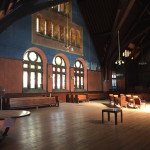
Sometimes even the architecture of churches seems to say, “Your Boss Sits Up Here” or “Stay Quiet In Your Pew And Listen To The Speaker” or “You Are Small. The Church Is Big.” (See photos, above and below:)

St. Benedict, Easter 2010

Rockefeller Chapel, special event

But, growing up, I felt at peace in Church in a way I didn’t in other places. People, time, and space seemed different there – kinder, more mindful, part of something bigger. But not everyone’s experience is like that. My brother and I grew up in the same church and when he was about eight years old, he told my mother, “Everyone bosses me. You boss me! Teachers boss me! God bosses me!” A friend of mine, who grew up in a relatively liberal church, has said church made her feel that she was never enough, that she could never live up to what being a Christian meant. To say nothing of gay, lesbian, bisexual, and transgender people, who may have been made to feel much, much worse.

It breaks my heart when I hear someone’s story of having been hurt by a church since I’ve found great meaning being part of Church communities, worship, and friendships for most of my life. But through almost four decades of being in love with God and Church, I’ve had to come to terms with the possibility that Church – even in all its forms and variety – may never be a place where everyone can find a home. At the same time, I’ve seen churches welcome in a way few other groups of people do — the disabled, the widowed, young children, people who may be a bit dirtier or messier than others, and even gay, lesbian, bisexual, and transgendered people.

I have very strong convictions about what Church should be like for those who do come. One is that Church should be a place where people are seen for who they are – precious in God’s sight and with gifts to give to this world and their neighbor.

I wish there were more stories out there of the ways Church can do that. I wish I could tell some of those stories, but as a priest, those stories aren’t really mine to tell  - I see them happen, but telling them on a blog is tough to do without trespassing on the person who the story belongs to.

Having said all that, I can’t deny that God does Tell Us What To Do: Love one another. Live honestly. Forgive and get forgiven. Take care of the poor, sick, stranger, and imprisoned. Read the Bible. Do This To Remember Me.

By becoming a priest, in a way, I’ve also chosen to Tell People What To Do. I preach a sermon almost every week and people sit and listen to me. (You can read or listen to some here, if you like.) But I hope what I’m really doing is telling people what God Tells Us To Do, in a way that makes their lives, the lives of those they love, and the whole world, better.

Here’s hoping!

Take 12 – August

Not all taken on August 12, but thereabouts… (“Take 12″ is a project to take 12 pictures of your daily life on the twelfth of each month in 2012).

My desk, with calendars, church directory, thank you notes, a Sunday bulletin, cup from Subway, to do list, and various:


The attendance count sheets we use at church: (next to a couple of my business cards)

A rack of robes for our acolytes – black cassocks and white surplices, in all sizes:


My favorite mailbox, just down the block from our house: (it once got knocked over by a snowplow, but they were able to remount it)


Odo watching me come back from the mailbox (“You’re coming back, right? Right?”)


My favorite part of the garden right now – stonecrop and giant zinnias:


I’d been trying to get a good picture of these white swamp flowers for over a week: (with soccer field lights and subdivision)


More white swamp flowers, early morning, with cattails and townhomes:


A storm drain that empties into above waterway;


We were at my in-laws, near Des Moines, last Friday and Saturday. This is the view from our bedroom window:


My new haircut at the Des Moines farmers’ market:


My in-laws’ house – a 100 year old Sears home with a few additions plus a pool – and my husband’s grandmother and cousin chatting on the patio: (and my knitting bag on steps — oops!)


Adam and family members (his brother, dad, uncle, and mom), re-unioning:


One of my in-laws’ famous sunsets — they live on a hill and the view to the west is amazing. My father-in-law sometimes texts us photos of sunsets he likes and adds, “Wish you were here!” For this one, we were!